
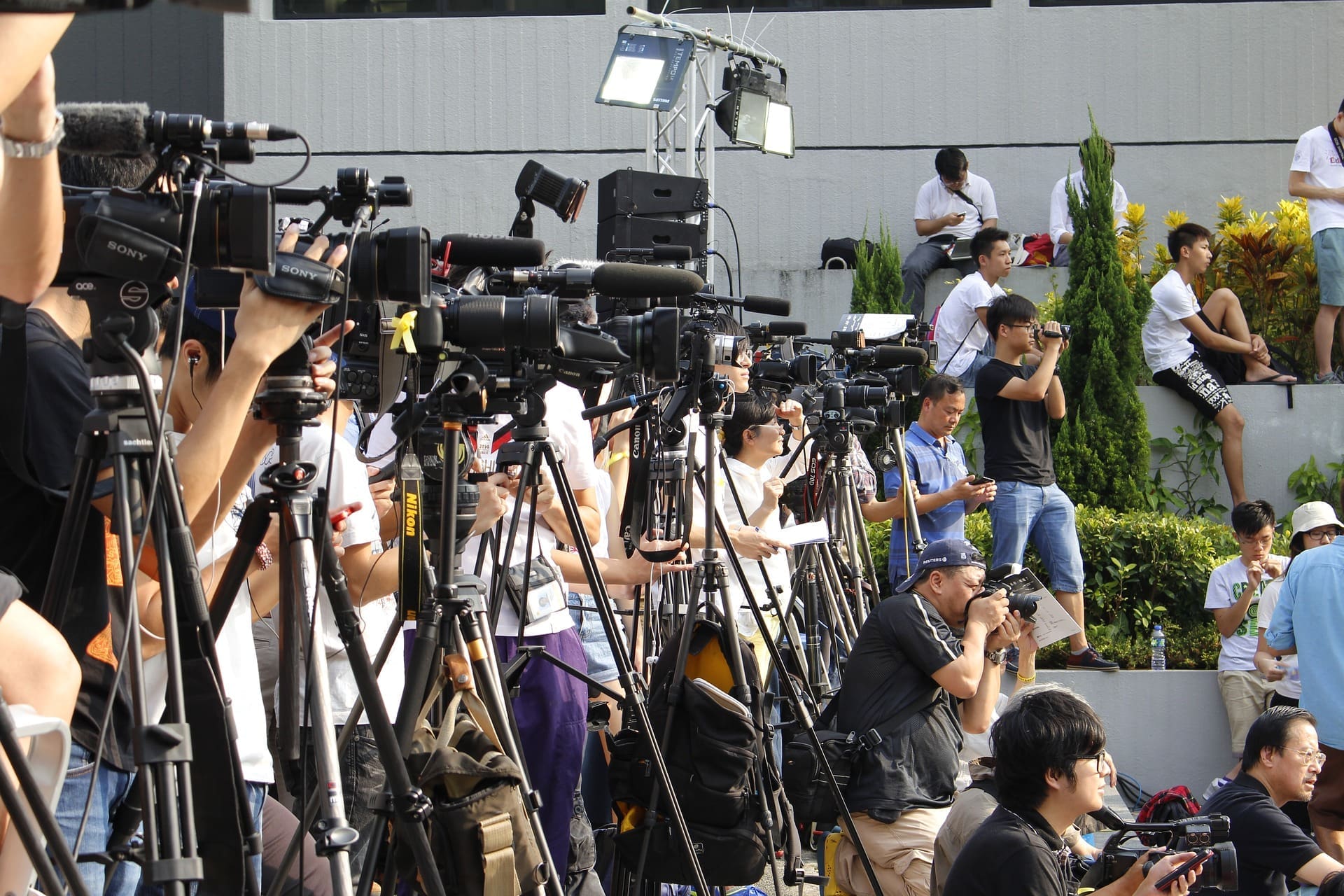
Image: Journalists covering an event. ©Andy Leung from Pixabay
04/12/25
Speed read
- For the first time, the World Conference of Science Journalists will be held in Africa (Pretoria, Dec 2025), bringing together global journalists to build skills, networks and collaborations around how science journalism can advance social justice, equity and resilience.

For the first time ever, the World Conference of Science Journalists (WCSJ) will be held on African soil. From 1 – 5 December 2025, hundreds of journalists and communication specialists will gather in Pretoria, South Africa, to network, learn new skills, and exchange ideas on how science journalism can contribute to social justice. This includes driving equity, accountability, and resilience, especially in regions facing systemic challenges.
“No matter where you are in your journalism journey — from student to mid-career to senior professional — this meeting is a wonderful opportunity for networking, skill-building, learning, opportunity-seeking, discussion, and commiseration with a welcoming global community on the challenges of our profession in turbulent times,” the organisers stated in an announcement earlier this month.
Held every two years, the conference has served as both a launching pad and a professional growth opportunity for many science journalists. For example, the growth of science journalism in Africa and the Arab world accelerated after the WCSJ 2004 in Montreal, Canada. Dozens of journalists who attended their first WCSJ in Montreal later benefited from the SjCOOP science journalism training and mentoring programme of the World Federation of Science Journalists (WFSJ). In turn, they helped establish science journalism associations and mentored many others in the field.
Debbie Ponchner, a science journalist from Costa Rica, recently shared her experience on LinkedIn, explaining why she looks forward to attending the next WCSJ. Her first conference was in Melbourne, Australia, in 2007, when she was just starting her career. At the time, science journalists were few in Costa Rica. She wrote: “The World Conference introduced me to my community. Through these meetings — besides Melbourne, I’ve been to Seoul, San Francisco, Lausanne, and Medellín — I’ve met and discussed our craft with colleagues, established networks with other science journalists, and opened doors to collaborate with different publications. I would recommend to any science journalist — whether early-career or experienced, staff or freelance — to join the meeting. It is an enriching experience!”
The overall theme of WCSJ2025 is “Science journalism and social justice: Journalism that builds understanding and resilience.” Under this theme, participants will explore a wide range of topics, including the state of science journalism, its role in advancing social justice, combating misinformation, the art of communication, and wellbeing for people and the planet.
The programme has both sessions aimed at improving journalism skills, and those designed to deepen journalists’ knowledge of specific scientific topics.
Journalism skills-focused sessions will cover science journalism ethics, reporting in conflict zones, risk communication on radio, investigative tools, using scientific data, and reporting on African traditional medicine, among others.
Topic-specific sessions will address areas such as space science, HIV, tuberculosis, climate change, quantum science, astronomy, antimicrobial resistance, mental health, human-wildlife conflict, scientific misconduct, green energy, water resources, metagenomics for emerging diseases, and conservation science.
A key highlight will be the Africa Science Journalism Awards Breakfast, organised by the Science for Africa Foundation. Awards will be presented in the categories of health, climate and environment, and agriculture.
The conference will also feature exhibitions, scientific tours, and networking events designed to foster collaboration across borders and disciplines.
This conference offers a timely opportunity for journalists to learn, connect, and lead conversations that matter.